
Reflections on what we’ve been hearing from schools
Author: Dr Dana Tarif, Research Officer
As part of our development work, we’ve been speaking to a range of people to find out how best to carry out our ambitious study.
We’re exploring a few different routes to recruitment, one of which is through schools. So earlier this year, we spent six weeks visiting schools across Bristol and South Gloucestershire to speak with young people, school staff and parents and carers about our plans and whether it might be feasible to run the study through schools.
Why we did this
This study is for young people and about young people, so we believe they need to be involved in shaping it from the very beginning. We also wanted to understand, practically, whether a school-based approach was feasible.
Many of the individual components we’re planning – questionnaires, physical measures, biological samples and data linkage – have been used in research before. What has not been done is combining all of them, in this type of setting and at this scale. This was our first opportunity to ask whether that was feasible and what it would require.
What we did
Between February and April 2026, we visited six schools (three primary, three secondary) across Bristol and South Gloucestershire. We ran discussion groups with young people, school staff and parents and carers, and conducted interviews with senior leadership teams (234 people in total). We also asked parents and carers to complete an online survey (257 people).
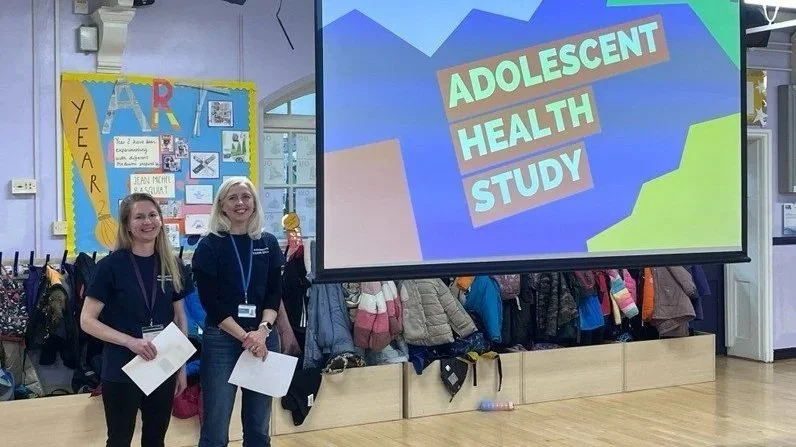
Members of the study team speak at a school assembly
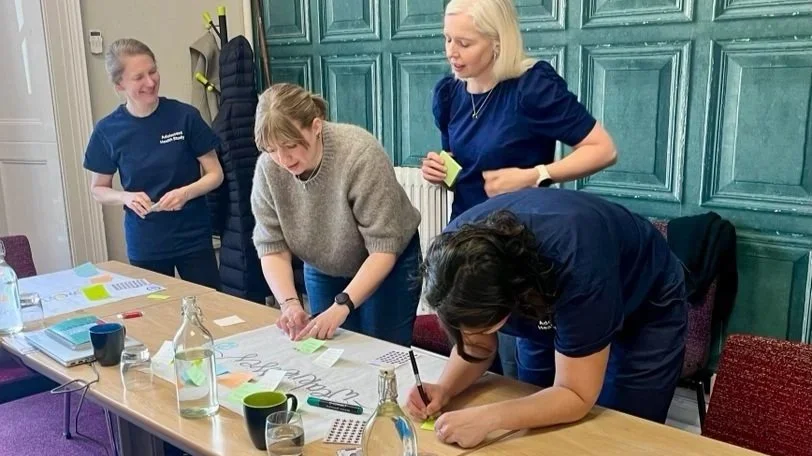
The study team organise the feedback from the school pupils.
It’s important to be clear that this was engagement and involvement work, not research. We were listening, asking questions and trying to understand how different people felt about what we were proposing. Sessions were designed to be flexible and responsive and aligned with our principles for engagement and involvement.
What we heard
Young people were engaged. If this work had a highlight, it was the young people. The pupils we spoke with were thoughtful, empathetic and genuinely curious about the implications of what we were proposing.
They asked good questions. They challenged things that didn’t make sense. They were honest about what they found off-putting and generous about what they were willing to consider.
There was also something inspiring about their enthusiasm for a study like ours. They understood, quickly and intuitively, why a long-term study of young people’s health mattered. They thought it was important. And they wanted to help make it happen.
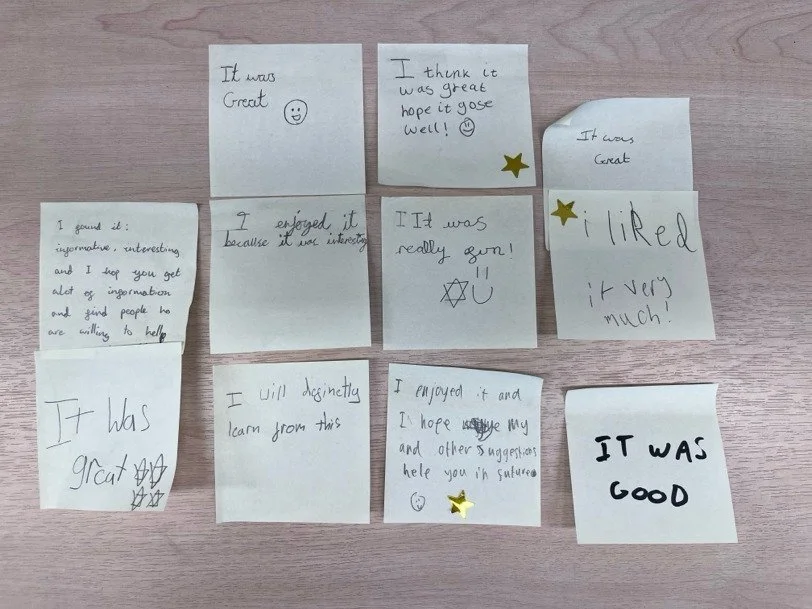
Feedback from school pupils written on sticky notes that describe what they liked about their involvement in these activities.
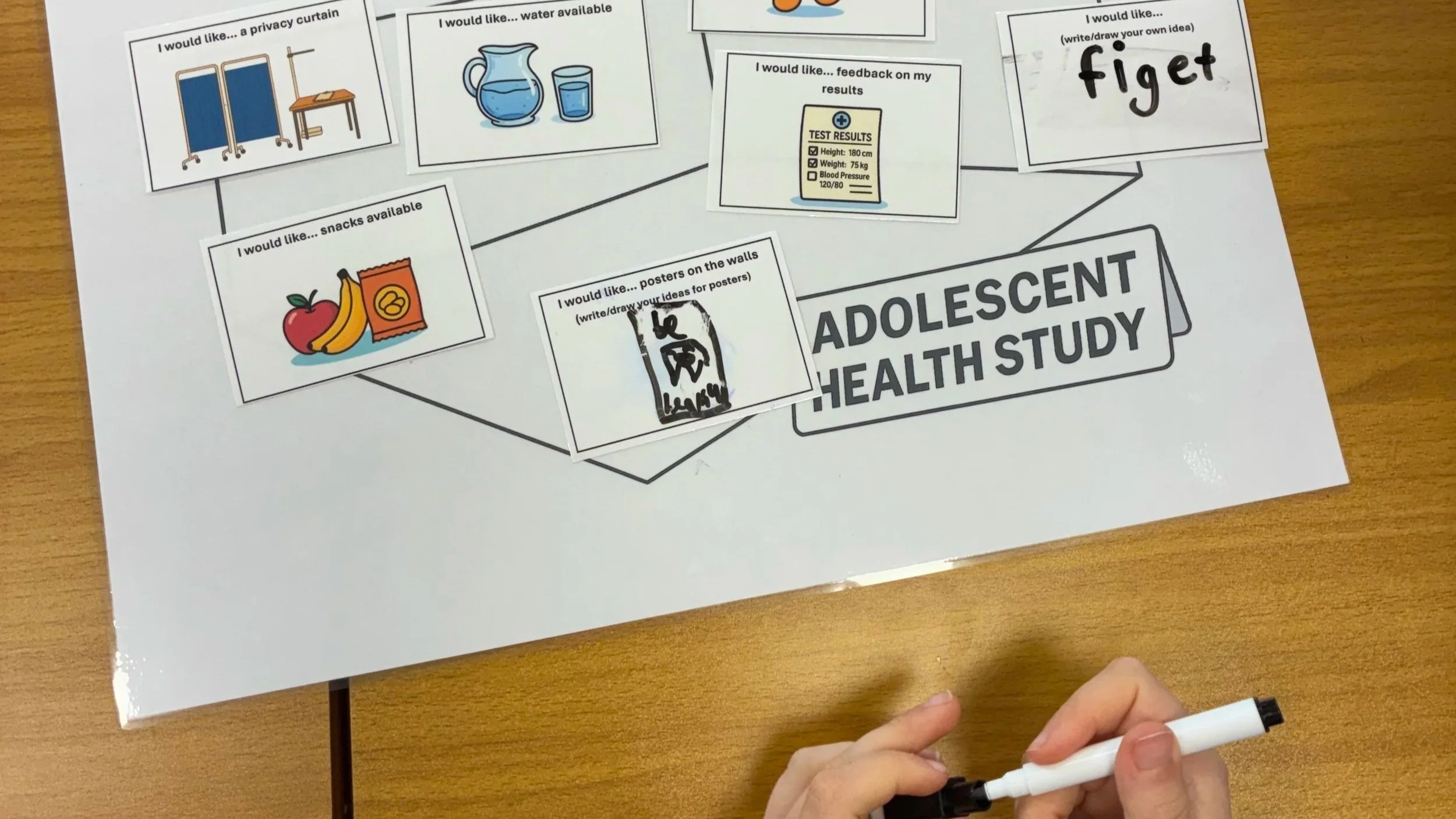
A school pupil lays out cards to describe their perfect setting for a study visit.
When we asked what they wanted from a study experience, they said: it’s OK to do it in school; make privacy a priority; give them a choice in taking part; and explain the purpose behind each element. That last point stood out across almost every group – uncertainty about why something was being asked was itself a barrier, one that largely resolved once we had explained the purpose.
Every school was different. One of the most striking observations about this work was how different every school was. Different procedures, different communities, different perspectives. That can present real challenges. But school leaders and school staff were optimistic about supporting a research project that they viewed as important to future generations of young people. While all schools had different views on what would work best for them, they were willing to try and accommodate a study like this.
Parent engagement. Parent engagement was the most challenging part. It’s important to say clearly that this was not because parents aren’t interested. Every conversation we did have with parents was incredibly useful. The challenge was reaching and engaging them in the first place.
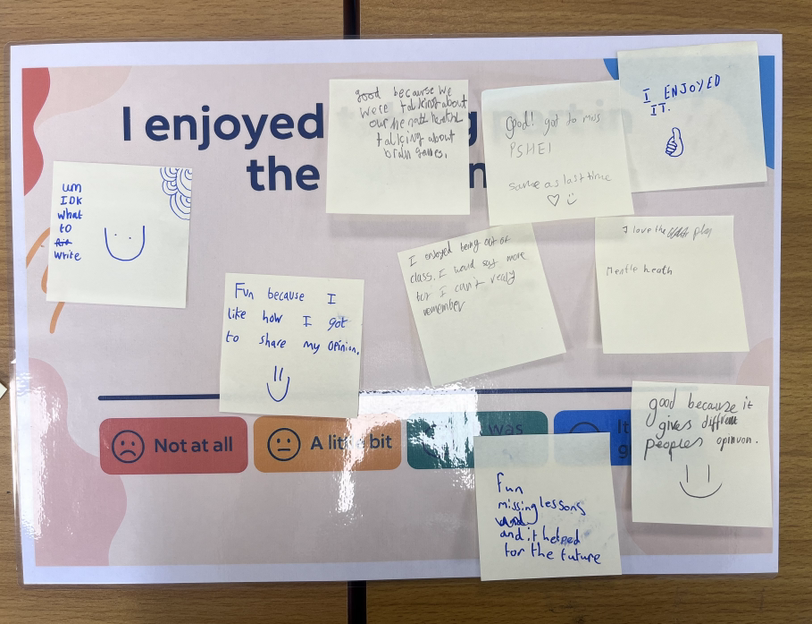
More feedback from school pupils written on sticky notes.
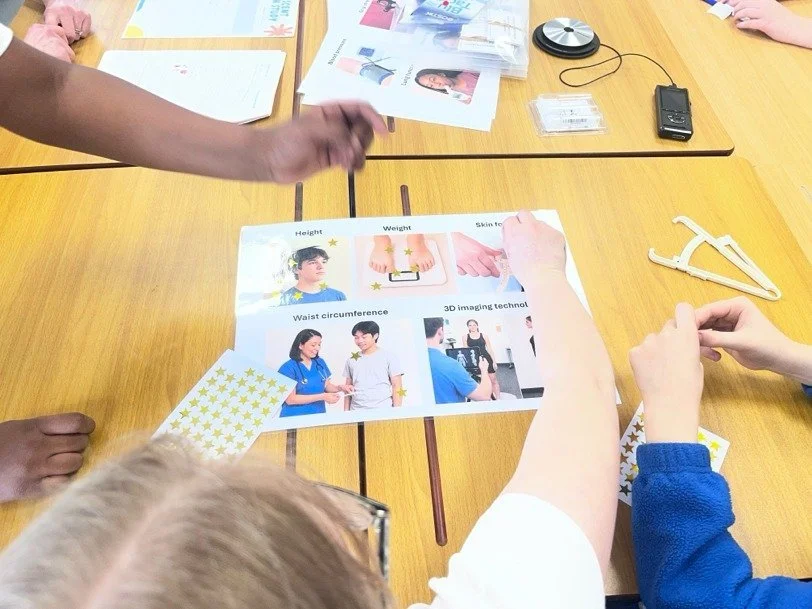
School pupils rank their preferences for different types of physical measurement.
Schools identified a range of potential barriers: the timing of sessions, language and literacy and the sheer volume of communications parents already receive from schools. Parents and carers are busy and asking them to engage with a new research study, however worthwhile, is a real ask.
This is something we’ll need to consider carefully as the study develops, and we’re already looking into ways we can engage more parents, carers and other important adults this year.
What remains to be explored
This phase of work has indicated that a school-based approach might be viable, that young people are engaged, and that schools could be genuinely willing partners.
But there are still many questions we’ve not yet answered. How does a school-based approach translate to a study operating at national scale? What potential is there to recruit volunteers outside of a school setting? And how does this compare?
Regardless of the recruitment approach we end up with, a key takeaway for us from this work was that the response across all groups was broadly positive – schools, families and young people were enthusiastic about a study dedicated to young people’s health and about being part of something that could make a real difference.
We’re grateful to all of the young people, staff, leaders, and families at our six pioneer schools. We’ve been given a lot to think about for the next stage of our work!